Now
FDA Approved

Symvess®
acellular tissue
engineered vessel-tyod

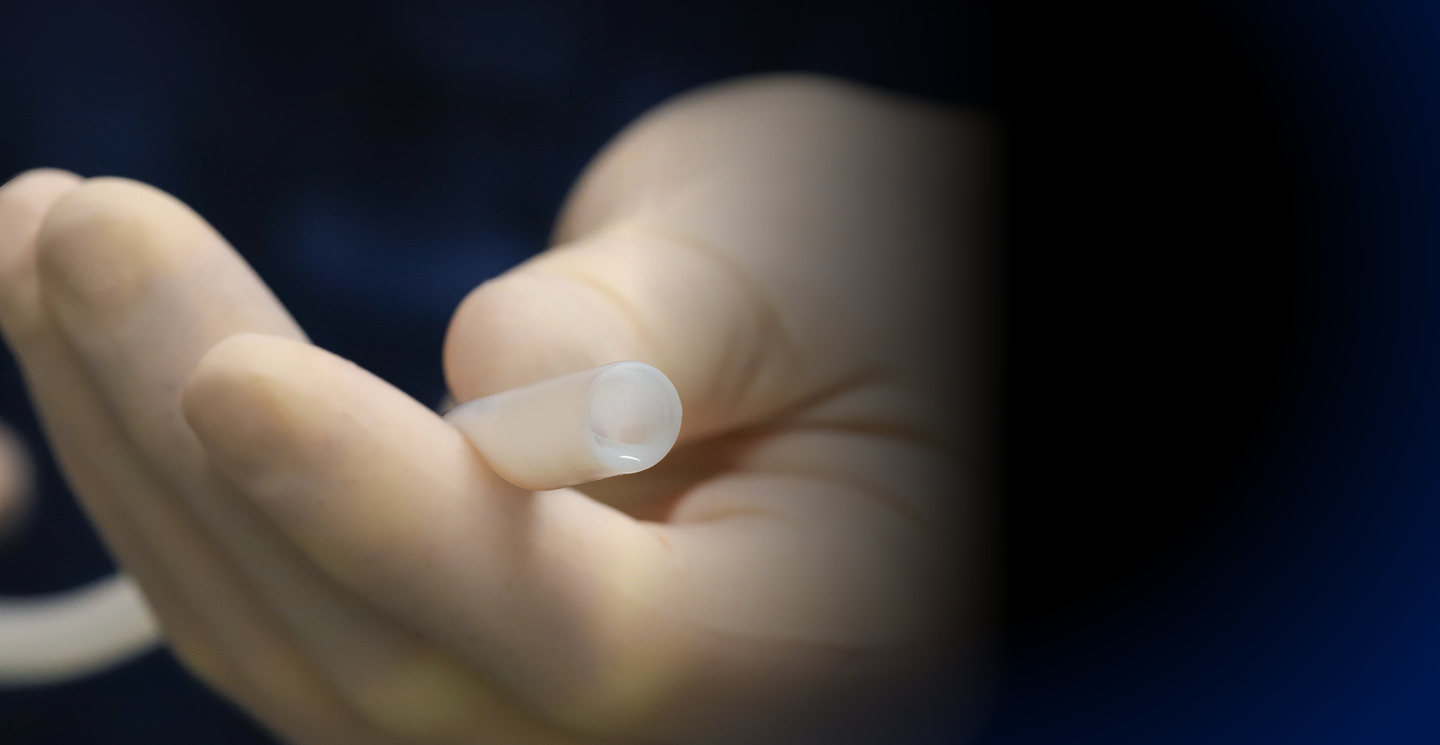
A first-of-its-kind human-derived biologic vessel indicated for use in adults as a vascular conduit for extremity arterial injury when urgent revascularization is needed to avoid imminent limb loss, and autologous vein graft is not feasible.1 Clinically proven outcomes showed high patency, low infection, and low amputation.1

Reference
  1. Symvess U.S. Prescribing Information. Durham, NC. Humacyte Global, Inc.
Repopulates
with the patient’s
cells1-3
Low susceptibility
to infection4
No immune
response
observed1-3,5
Off-the-shelf,
ready to use1,3
Low amputation
results1
About Symvess

The first and only
human-derived Acellular
Tissue Engineered Vessel
(ATEV)
for vascular trauma repair.1
Precisely bioengineered for consistency and predictability from vessel to vessel.2,3

Designed to address challenges and limitations in vascular repair, Symvess retains bioactivity, restores blood flow post-implantation, and repopulates with the patient’s cells.1-3

  • Off-the-shelf, ready to use1,3
  • No vein harvest site1,3
  • No immune response observed1-3,5
  • Low susceptibility to infection4

Want to learn more?

Contact a Member of Our Sales Team

Take the first step toward integrating Symvess into your facility.

Request a Symvess Demo

See first hand how Symvess can help you manage your complex vascular trauma patients.
How It Works

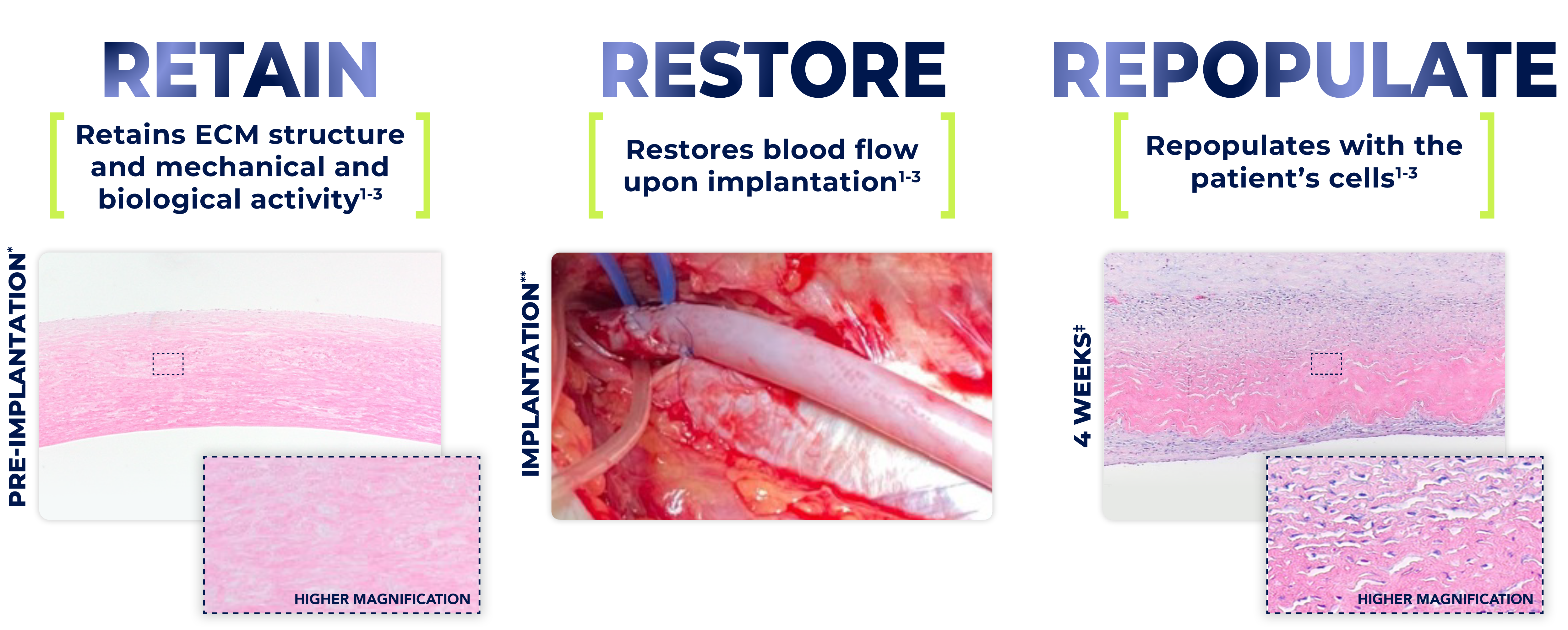
Symvess contains multiple extracellular matrix (ECM) proteins  that upon implantation support the patient’s cells to bind and proliferate.1-3

The exact mechanism of action has not been established.

* H&E-stained cross-section of Symvess pre-implantation. Higher magnification of region in dashed box shows no cells in Symvess wall.

** Image of Symvess implanted in human clinical setting restoring blood flow.

Observed in porcine preclinical setting of H&E-stained cross-section of Symvess mid-graft tissue explant revealing high density and infiltration depth of host cells. Higher magnification of region in dashed box shows leukocytes and fibroblast-like cells in Symvess wall.6

The Latest

Symvess-related
news and events

\
Actual Patient

To the doctors and scientists who are working in the technology field in order to create something like Symvess...

I’m extremely thankful...

Devin Barnett
ATEV Recipient, CLN-PRO-V005 Clinical Trial

References
  1. Symvess U.S. Prescribing Information. Durham, NC. Humacyte Global, Inc.
  2. Kirkton RD, et al. Bioengineered human acellular vessels recellularize and evolve into living blood vessels after human implantation. Sci Transl Med. 2019;11(485):eaau6934.
  3. Dahl SL, et al. Readily available tissue-engineered vascular grafts. Sci Transl Med. 2011 Feb 2;3(68):68ra9.
  4. Wang J, et al. Biological mechanisms of infection resistance in tissue engineered blood vessels compared to synthetic expanded polytetrafluoroethylene grafts. JVS Vasc Sci. 2023;4:100120.
  5. Moore EE, et al. Bioengineered Human Arteries for the Repair of Vascular Injuries. JAMA Surg. 2024 Nov 20:e244893.
  6. Kirkton RD, et al. Evaluation of vascular repair by tissue-engineered human acellular vessels or expanded polytetrafluoroethylene grafts in a porcine model of limb ischemia and reperfusion. J Trauma Acute Care Surg. 2023;95: 234–241.
INDICATION AND IMPORTANT SAFETY INFORMATION FOR SYMVESS

IMPORTANT SAFETY INFORMATION

BOXED WARNING: GRAFT FAILURE

  • Loss of SYMVESS integrity due to mid-graft rupture or anastomotic failure can result in life threatening hemorrhage.

CONTRAINDICATIONS

DO NOT use SYMVESS in patients who have a medical condition that would preclude long-term antiplatelet therapy (such as aspirin or clopidogrel) after resolution of acute injuries.

WARNINGS & PRECAUTIONS

  • Graft Rupture: Vascular graft rupture has occurred in patients treated with SYMVESS. Advise patients that arterial bleeding can be life-threatening and to seek emergent medical evaluation for any signs or symptoms of graft rupture such as bleeding, pain and swelling in the extremity, or signs of extremity ischemia. Follow appropriate procedures for handling and administering SYMVESS.
  • Anastomotic Failure: Anastomotic failure has occurred in patients treated with SYMVESS. In clinical studies of SYMVESS, anastomotic failure occurred within the first 36 days post-implantation. Monitor patients for signs of anastomotic failure such as pain and swelling at the surgical site, decreasing hemoglobin or other signs and symptoms of bleeding. Advise patients to seek urgent medical evaluation if they have any signs or symptoms that may be indicative of anastomotic failure such as bleeding, swelling or worsening pain at the surgical site or changes in color of overlying skin. Follow appropriate procedures for handling and administering SYMVESS.
  • Thrombosis: Thrombosis has occurred in patients treated with SYMVESS. In clinical trials of SYMVESS, patients received antiplatelet therapy following implantation of SYMVESS to reduce the risk of thrombosis. The risk of thrombosis may increase in patients who discontinue antiplatelet therapy. Anti-platelet therapy is recommended following treatment with SYMVESS.
  • Transmission of Infectious Diseases: SYMVESS is manufactured using cells and reagents that may transmit infectious diseases or infectious agents. The cells used in the manufacture of SYMVESS are derived from a donor who met the donor eligibility requirements for transmissible infectious diseases. Animal-derived reagents are tested for animal viruses, bacteria, fungi, and mycoplasma before use, but this does not eliminate the risk of transmitting these or other transmissible infectious diseases and disease agents. No transmissible agent infections have been reported during clinical testing.

ADVERSE REACTIONS

The most common adverse reactions (≥3%) were thrombosis, fever, pain, anastomotic stenosis, rupture or anastomotic failure, and infection.

USE IN SPECIFIC POPULATIONS

Pediatric Use: The safety and effectiveness of SYMVESS in pediatric patients (0 to 17 years old) have not been established.

Geriatric Use: Two patients out of the 54 Extremity Group implanted with SYMVESS as a conduit in Study 1 were aged ≥65 years. The number of patients aged ≥65 years was not sufficient to determine whether they responded differently than younger patients to SYMVESS.

INDICATION

SYMVESS is an acellular tissue engineered vessel indicated for use in adults as a vascular conduit for extremity arterial injury when urgent revascularization is needed to avoid imminent limb loss, and autologous vein graft is not feasible.


INDICATION AND IMPORTANT SAFETY INFORMATION FOR SYMVESS

IMPORTANT SAFETY INFORMATION

BOXED WARNING: GRAFT FAILURE

  • Loss of SYMVESS integrity due to mid-graft rupture or anastomotic failure can result in life threatening hemorrhage.

CONTRAINDICATIONS

DO NOT use SYMVESS in patients who have a medical condition that would preclude long-term antiplatelet therapy (such as aspirin or clopidogrel) after resolution of acute injuries.

WARNINGS & PRECAUTIONS

  • Graft Rupture: Vascular graft rupture has occurred in patients treated with SYMVESS. Advise patients that arterial bleeding can be life-threatening and to seek emergent medical evaluation for any signs or symptoms of graft rupture such as bleeding, pain and swelling in the extremity, or signs of extremity ischemia. Follow appropriate procedures for handling and administering SYMVESS.
  • Anastomotic Failure: Anastomotic failure has occurred in patients treated with SYMVESS. In clinical studies of SYMVESS, anastomotic failure occurred within the first 36 days post-implantation. Monitor patients for signs of anastomotic failure such as pain and swelling at the surgical site, decreasing hemoglobin or other signs and symptoms of bleeding. Advise patients to seek urgent medical evaluation if they have any signs or symptoms that may be indicative of anastomotic failure such as bleeding, swelling or worsening pain at the surgical site or changes in color of overlying skin. Follow appropriate procedures for handling and administering SYMVESS.
  • Thrombosis: Thrombosis has occurred in patients treated with SYMVESS. In clinical trials of SYMVESS, patients received antiplatelet therapy following implantation of SYMVESS to reduce the risk of thrombosis. The risk of thrombosis may increase in patients who discontinue antiplatelet therapy. Anti-platelet therapy is recommended following treatment with SYMVESS.
  • Transmission of Infectious Diseases: SYMVESS is manufactured using cells and reagents that may transmit infectious diseases or infectious agents. The cells used in the manufacture of SYMVESS are derived from a donor who met the donor eligibility requirements for transmissible infectious diseases. Animal-derived reagents are tested for animal viruses, bacteria, fungi, and mycoplasma before use, but this does not eliminate the risk of transmitting these or other transmissible infectious diseases and disease agents. No transmissible agent infections have been reported during clinical testing.

ADVERSE REACTIONS

The most common adverse reactions (≥3%) were thrombosis, fever, pain, anastomotic stenosis, rupture or anastomotic failure, and infection.

USE IN SPECIFIC POPULATIONS

Pediatric Use: The safety and effectiveness of SYMVESS in pediatric patients (0 to 17 years old) have not been established.

Geriatric Use: Two patients out of the 54 Extremity Group implanted with SYMVESS as a conduit in Study 1 were aged ≥65 years. The number of patients aged ≥65 years was not sufficient to determine whether they responded differently than younger patients to SYMVESS.

INDICATION

SYMVESS is an acellular tissue engineered vessel indicated for use in adults as a vascular conduit for extremity arterial injury when urgent revascularization is needed to avoid imminent limb loss, and autologous vein graft is not feasible.