How It Works

Retain, Restore & Repopulate

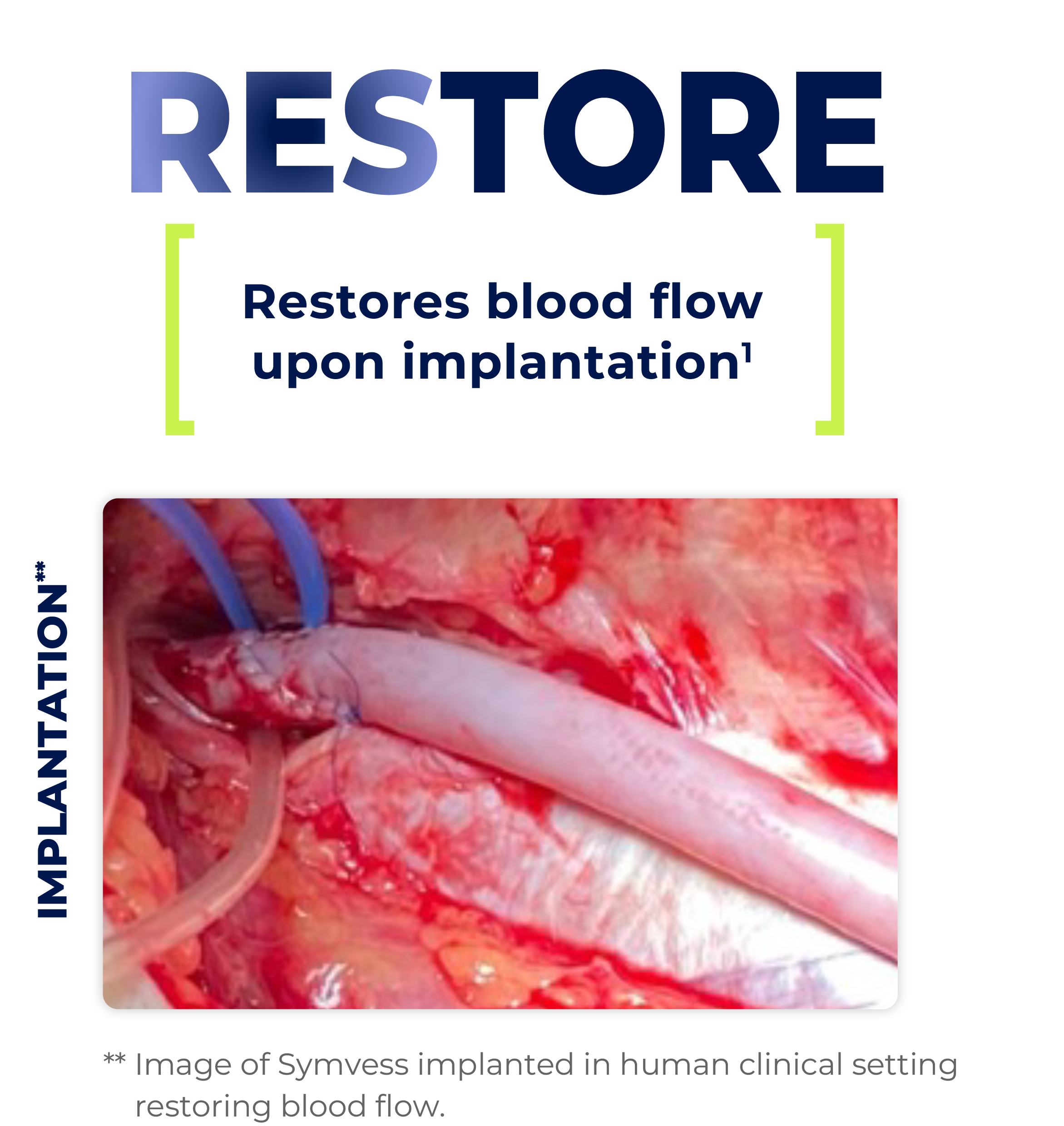
Symvess® is intended to restore blood flow quickly post-implantation.1,2
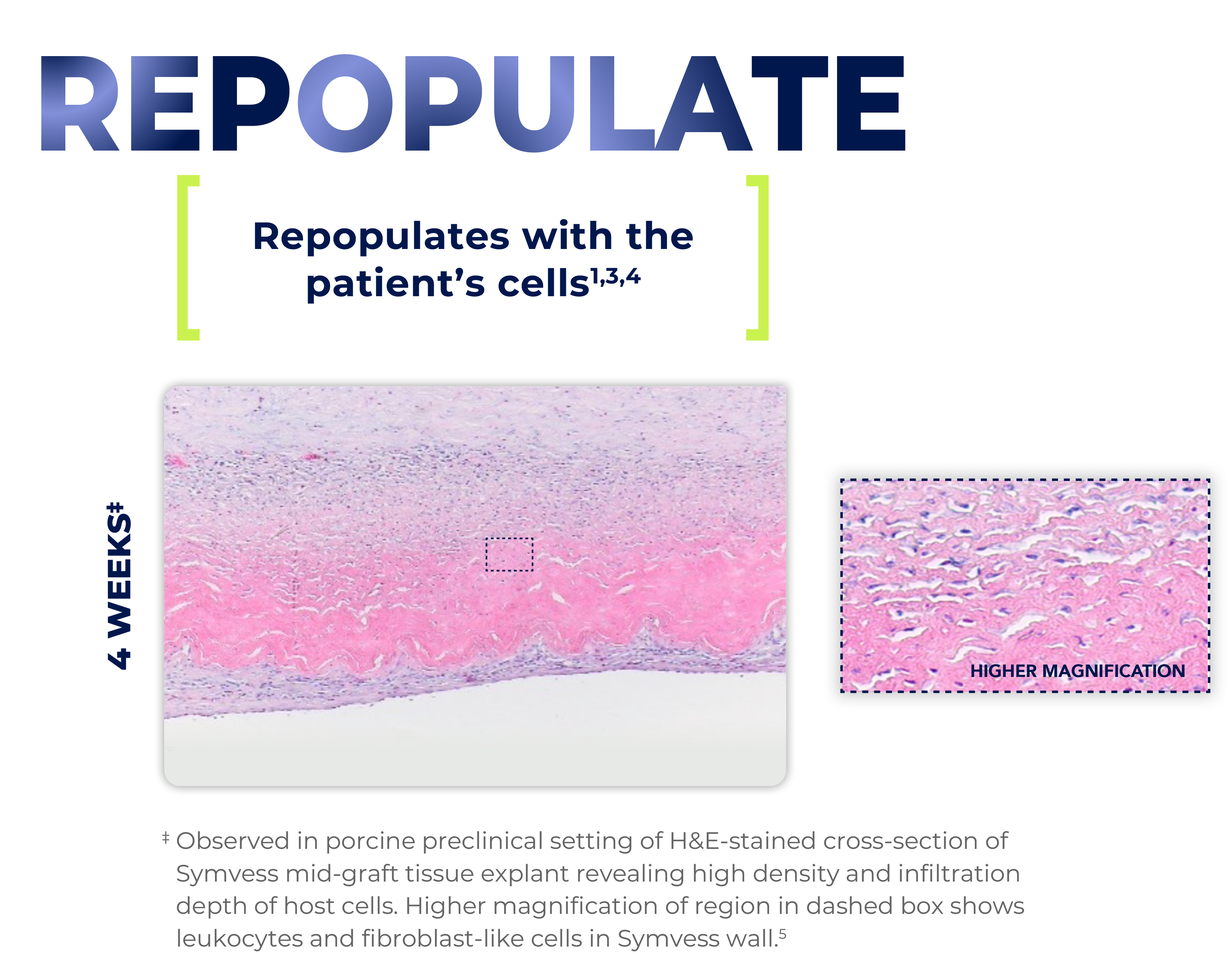
Over time, Symvess repopulates with the patient’s cells.1,3,4

Delayed intervention can increase the risk of complications and amputation in vascular trauma repair.2 Symvess is available off-the-shelf and ready to use for implantation.1,4 No time is needed for harvesting vein, thawing, or rinsing after removal from its packaging, which in turn helps deliver time sensitive treatment to trauma patients when they need it most.1
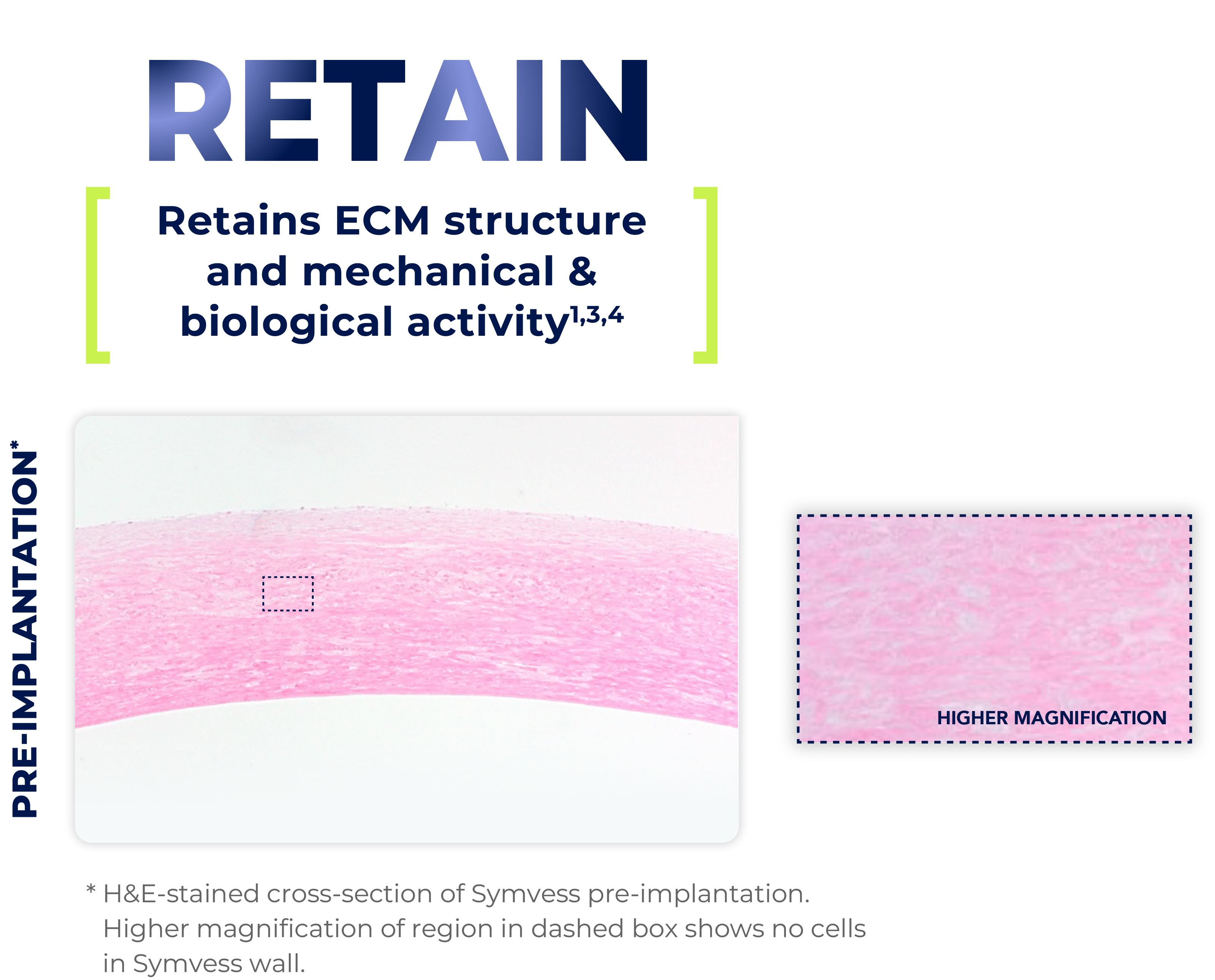
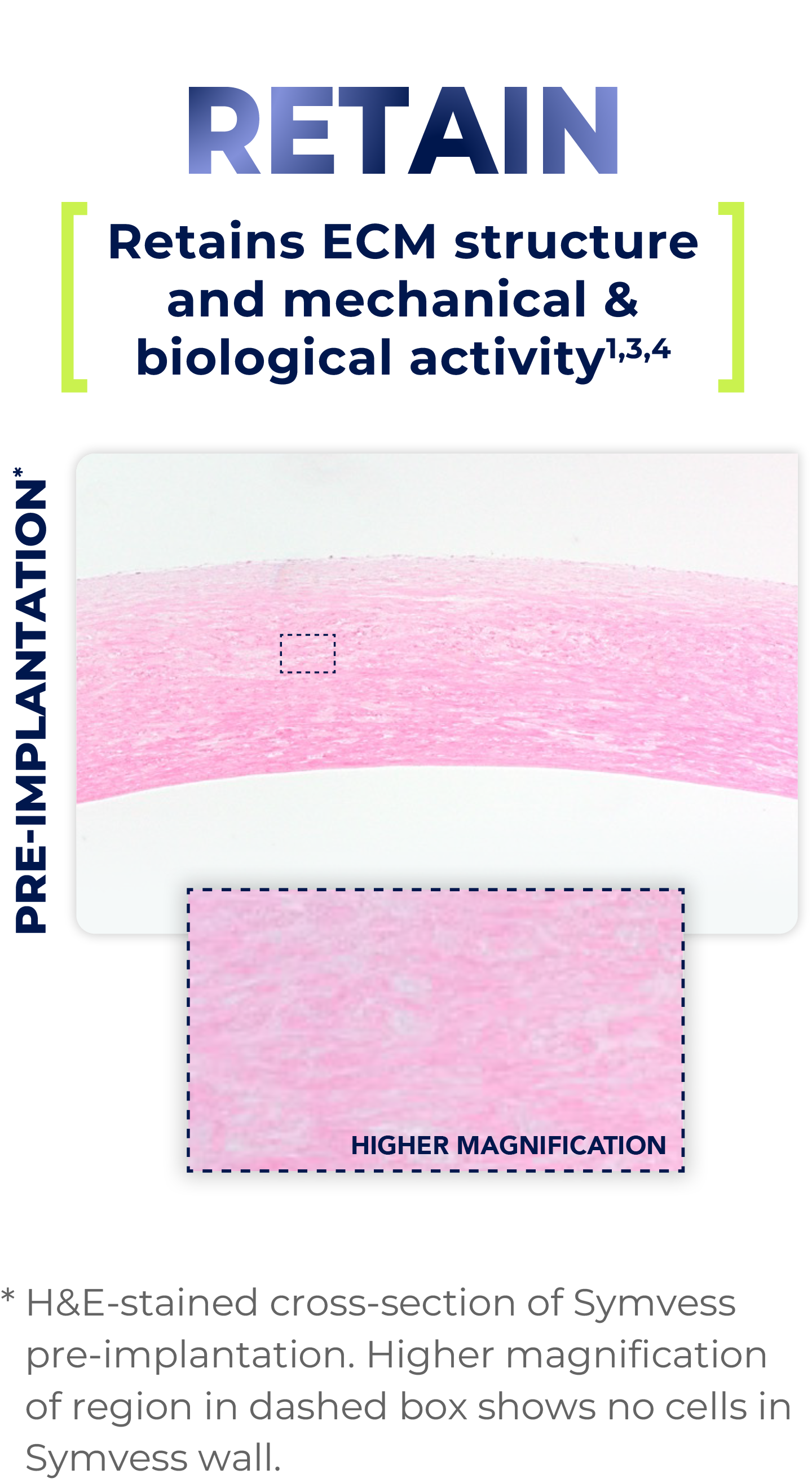
Symvess Contains Multiple Extracellular Matrix (ECM) Proteins
that upon implantation support the patient’s cells to bind and proliferate.1,3,4

The Bioactive Properties of Symvess Harness
the Body’s Own Natural Processes1,3,4

No Immune Response
Observed1,3,4,6

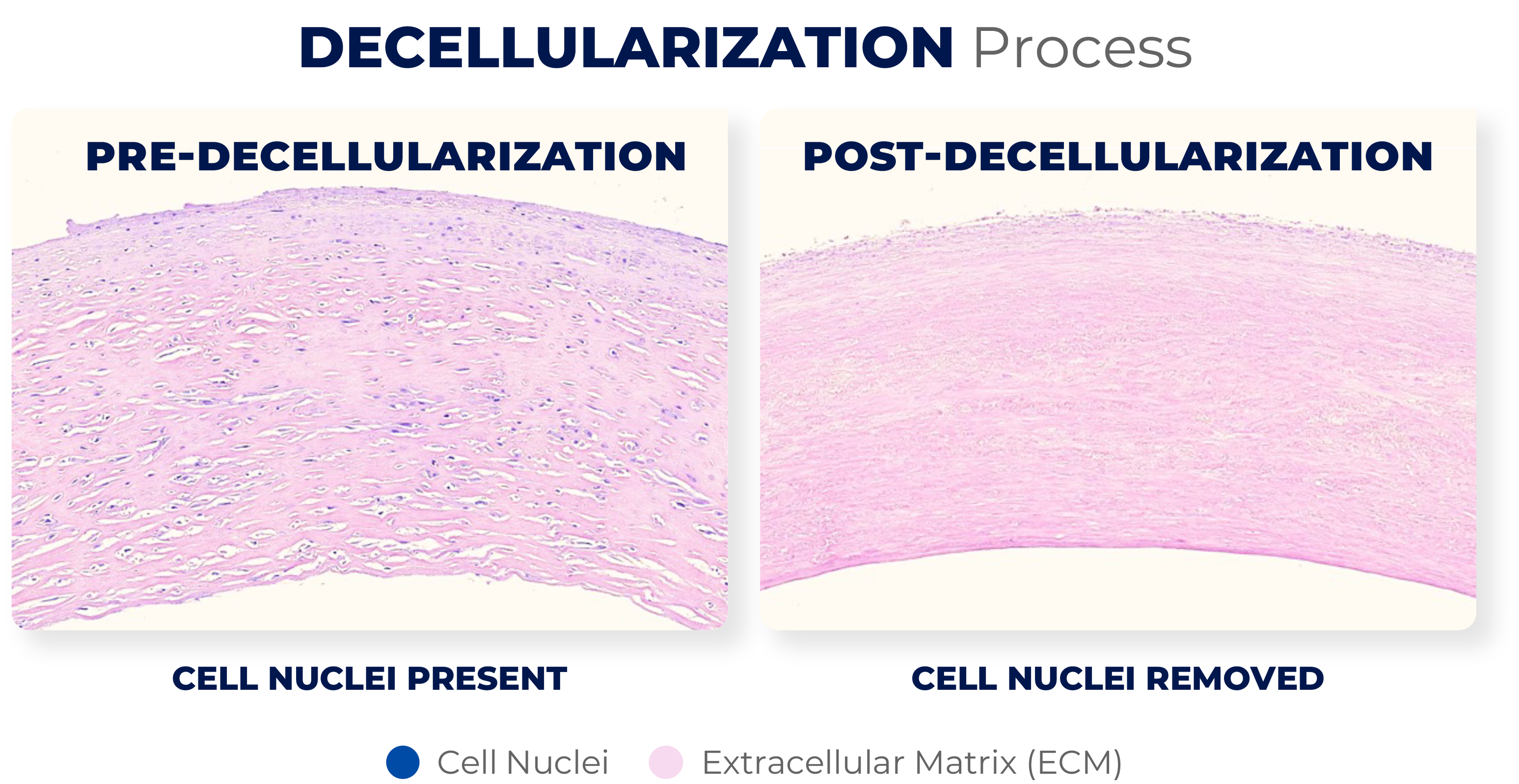
Cell nuclei are removed creating a universally implantable, bioactive Acellular Tissue Engineered Vessel.1,3,4,6
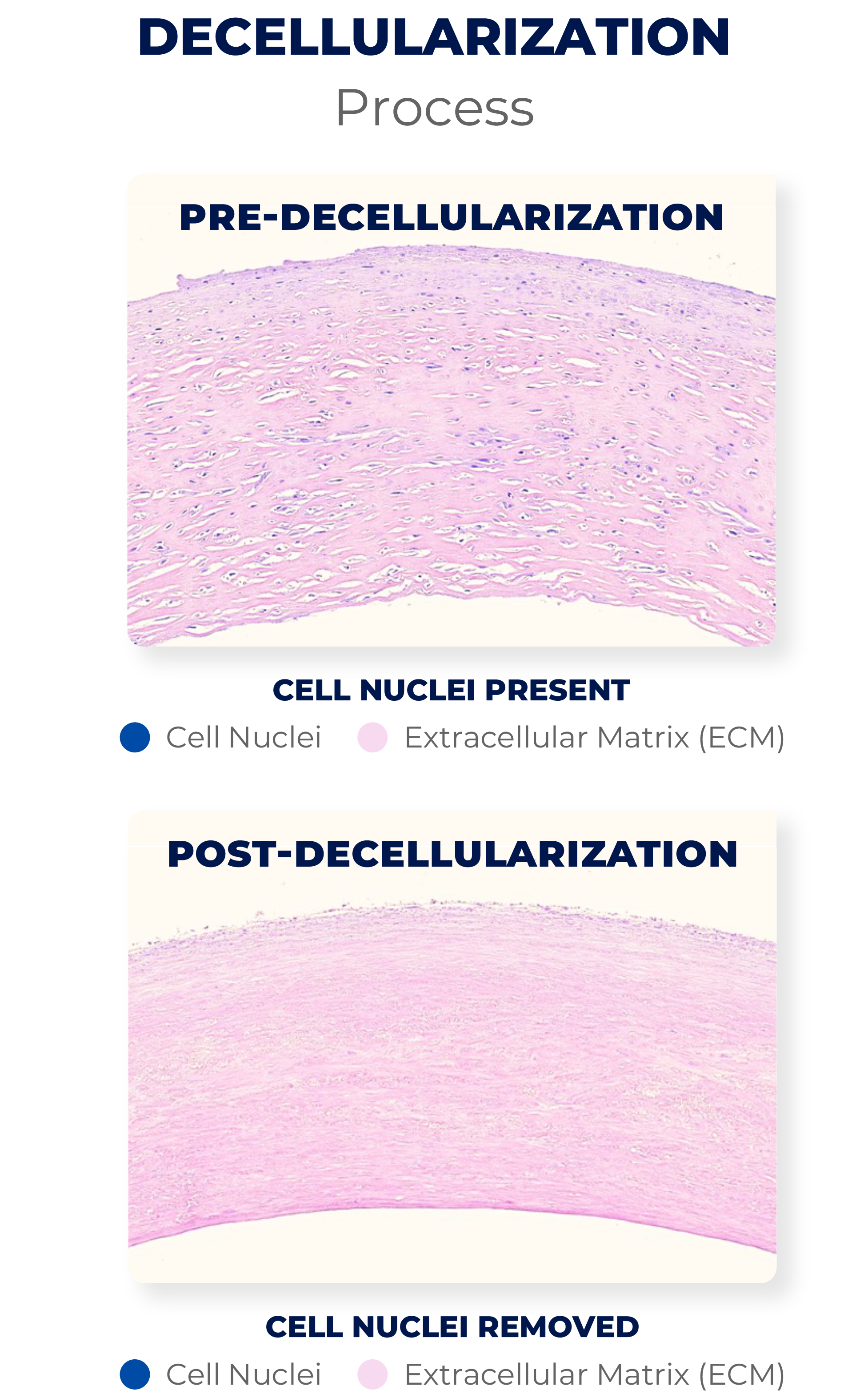

Retains Key Proteins for
Symvess Bioactivity1,3,4,7

Symvess Supports Human
Neutrophil Viability and
Function8

Symvess exhibited low susceptibility to infection, likely due to its biocompatibility with host cells including neutrophils because of its native-like composition of human extracellular matrix proteins.8
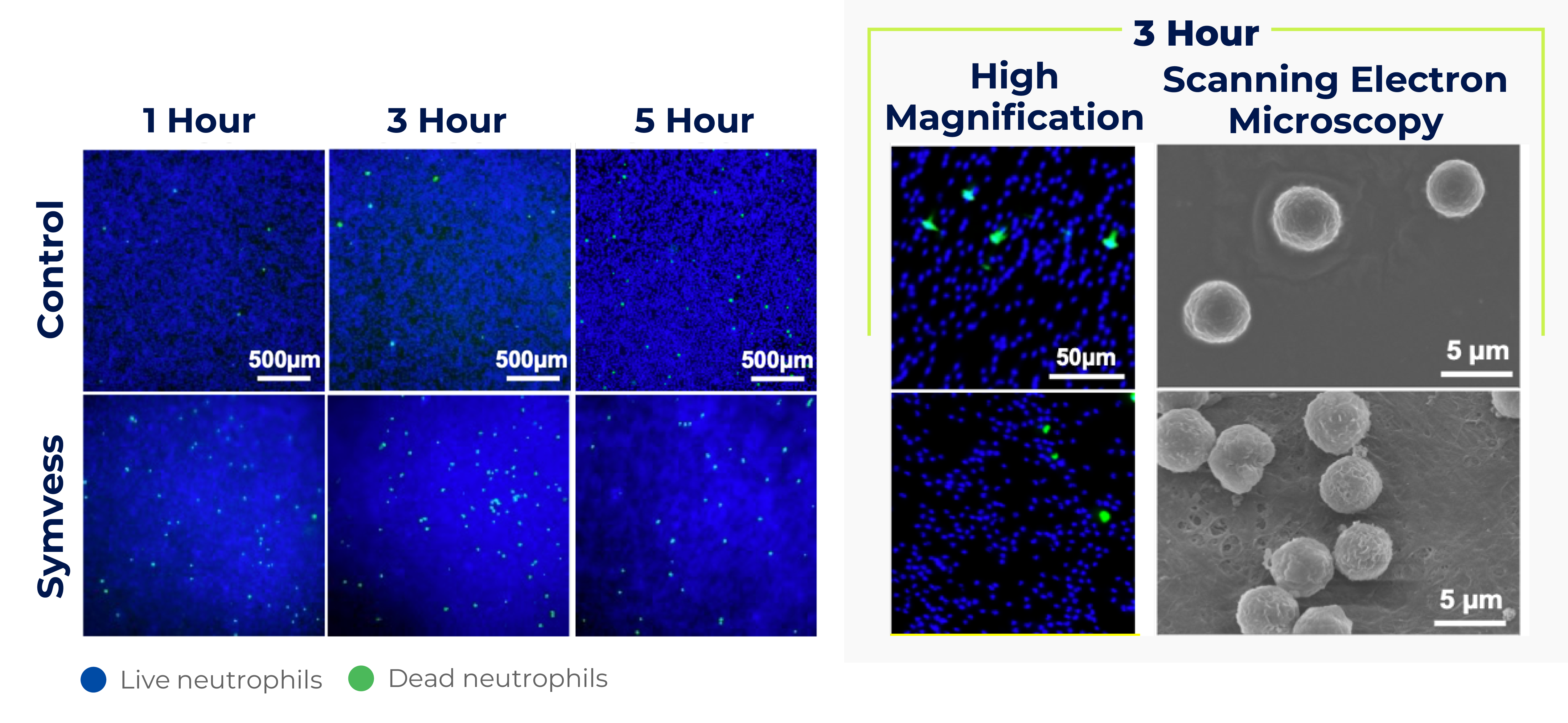
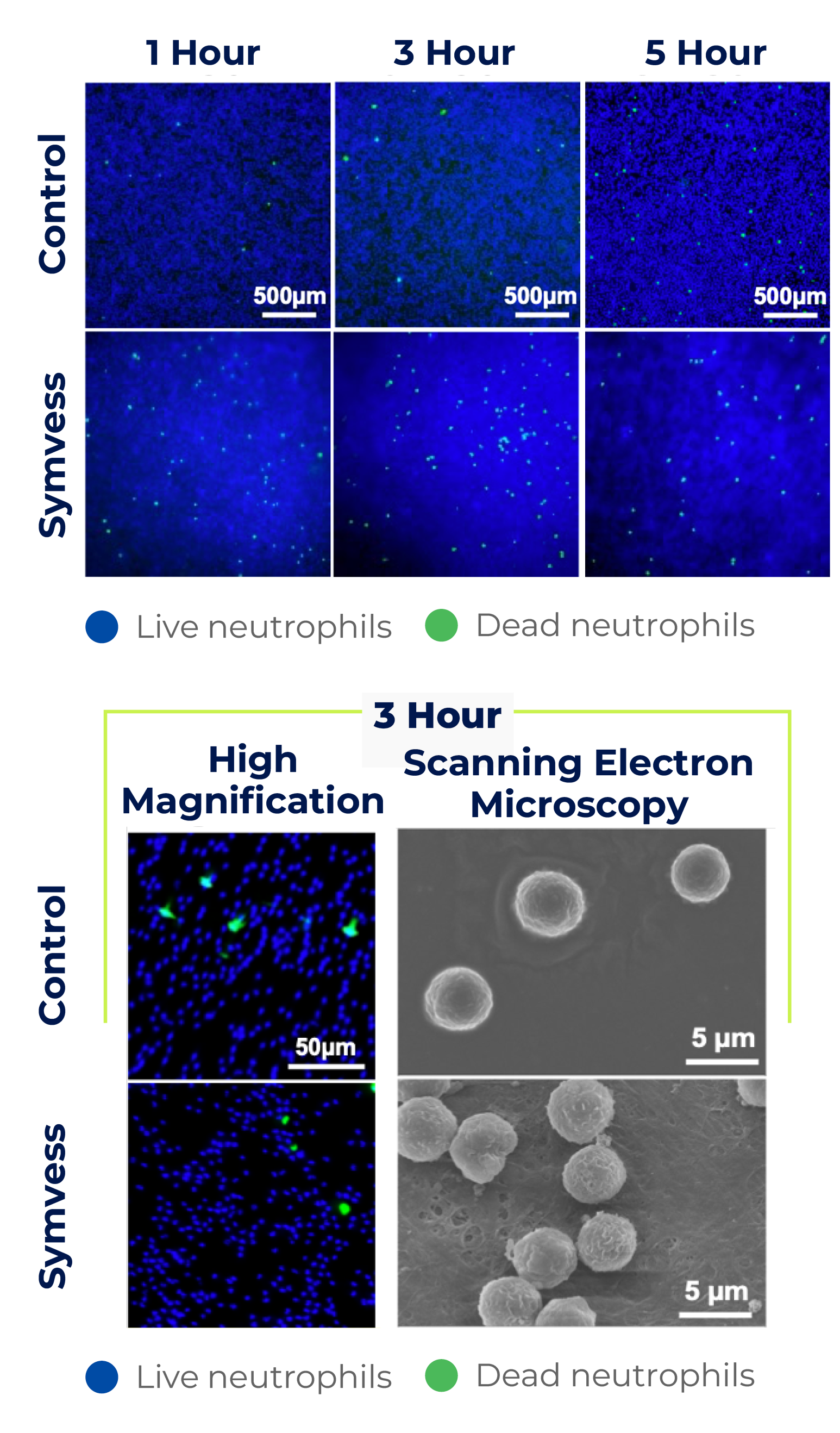
Neutrophils on Symvess demonstrated bacteria ensnaring and elimination capabilities, as evidenced by NET formation and bacterial cell lysis, preserving neutrophil viability and function.8
References:
  1. Symvess U.S. Prescribing Information. Durham, NC. Humacyte Global, Inc.
  2. Alarhayem A, et al. Impact of time to repair on outcomes in patients with lower extremity arterial injuries. Journal of Vascular Surgery 2019; 69: 1519-1523.
  3. Kirkton RD, et al. Bioengineered human acellular vessels recellularize and evolve into living blood vessels after human implantation. Sci Transl Med. 2019;11(485):eaau6934.
  4. Dahl S. et al. Readily available tissue-engineered vascular grafts. Sci Transl Med. 2011 Feb 2;3(68):68ra9.
  5. Kirkton RD, et al. Evaluation of vascular repair by tissue-engineered human acellular vessels or expanded polytetrafluoroethylene grafts in a porcine model of limb ischemia and reperfusion. J Trauma Acute Care Surg. 2023;95: 234–241.
  6. Moore EE, et al. Bioengineered Human Arteries for the Repair of Vascular Injuries. JAMA Surg. 2024 Nov 20:e244893.
  7. Data on File.
  8. Wang J, et al. Biological mechanisms of infection resistance in tissue engineered blood vessels compared to synthetic expanded polytetrafluoroethylene grafts. JVS Vasc Sci. 2023;4:100120.
INDICATION AND IMPORTANT SAFETY INFORMATION FOR SYMVESS

IMPORTANT SAFETY INFORMATION

BOXED WARNING: GRAFT FAILURE

  • Loss of SYMVESS integrity due to mid-graft rupture or anastomotic failure can result in life threatening hemorrhage.

CONTRAINDICATIONS

DO NOT use SYMVESS in patients who have a medical condition that would preclude long-term antiplatelet therapy (such as aspirin or clopidogrel) after resolution of acute injuries.

WARNINGS & PRECAUTIONS

  • Graft Rupture: Vascular graft rupture has occurred in patients treated with SYMVESS. Advise patients that arterial bleeding can be life-threatening and to seek emergent medical evaluation for any signs or symptoms of graft rupture such as bleeding, pain and swelling in the extremity, or signs of extremity ischemia. Follow appropriate procedures for handling and administering SYMVESS.
  • Anastomotic Failure: Anastomotic failure has occurred in patients treated with SYMVESS. In clinical studies of SYMVESS, anastomotic failure occurred within the first 36 days post-implantation. Monitor patients for signs of anastomotic failure such as pain and swelling at the surgical site, decreasing hemoglobin or other signs and symptoms of bleeding. Advise patients to seek urgent medical evaluation if they have any signs or symptoms that may be indicative of anastomotic failure such as bleeding, swelling or worsening pain at the surgical site or changes in color of overlying skin. Follow appropriate procedures for handling and administering SYMVESS.
  • Thrombosis: Thrombosis has occurred in patients treated with SYMVESS. In clinical trials of SYMVESS, patients received antiplatelet therapy following implantation of SYMVESS to reduce the risk of thrombosis. The risk of thrombosis may increase in patients who discontinue antiplatelet therapy. Anti-platelet therapy is recommended following treatment with SYMVESS.
  • Transmission of Infectious Diseases: SYMVESS is manufactured using cells and reagents that may transmit infectious diseases or infectious agents. The cells used in the manufacture of SYMVESS are derived from a donor who met the donor eligibility requirements for transmissible infectious diseases. Animal-derived reagents are tested for animal viruses, bacteria, fungi, and mycoplasma before use, but this does not eliminate the risk of transmitting these or other transmissible infectious diseases and disease agents. No transmissible agent infections have been reported during clinical testing.

ADVERSE REACTIONS

The most common adverse reactions (≥3%) were thrombosis, fever, pain, anastomotic stenosis, rupture or anastomotic failure, and infection.

USE IN SPECIFIC POPULATIONS

Pediatric Use: The safety and effectiveness of SYMVESS in pediatric patients (0 to 17 years old) have not been established.

Geriatric Use: Two patients out of the 54 Extremity Group implanted with SYMVESS as a conduit in Study 1 were aged ≥65 years. The number of patients aged ≥65 years was not sufficient to determine whether they responded differently than younger patients to SYMVESS.

INDICATION

SYMVESS is an acellular tissue engineered vessel indicated for use in adults as a vascular conduit for extremity arterial injury when urgent revascularization is needed to avoid imminent limb loss, and autologous vein graft is not feasible.

INDICATION AND IMPORTANT SAFETY INFORMATION FOR SYMVESS

IMPORTANT SAFETY INFORMATION

BOXED WARNING: GRAFT FAILURE

  • Loss of SYMVESS integrity due to mid-graft rupture or anastomotic failure can result in life threatening hemorrhage.

CONTRAINDICATIONS

DO NOT use SYMVESS in patients who have a medical condition that would preclude long-term antiplatelet therapy (such as aspirin or clopidogrel) after resolution of acute injuries.

WARNINGS & PRECAUTIONS

  • Graft Rupture: Vascular graft rupture has occurred in patients treated with SYMVESS. Advise patients that arterial bleeding can be life-threatening and to seek emergent medical evaluation for any signs or symptoms of graft rupture such as bleeding, pain and swelling in the extremity, or signs of extremity ischemia. Follow appropriate procedures for handling and administering SYMVESS.
  • Anastomotic Failure: Anastomotic failure has occurred in patients treated with SYMVESS. In clinical studies of SYMVESS, anastomotic failure occurred within the first 36 days post-implantation. Monitor patients for signs of anastomotic failure such as pain and swelling at the surgical site, decreasing hemoglobin or other signs and symptoms of bleeding. Advise patients to seek urgent medical evaluation if they have any signs or symptoms that may be indicative of anastomotic failure such as bleeding, swelling or worsening pain at the surgical site or changes in color of overlying skin. Follow appropriate procedures for handling and administering SYMVESS.
  • Thrombosis: Thrombosis has occurred in patients treated with SYMVESS. In clinical trials of SYMVESS, patients received antiplatelet therapy following implantation of SYMVESS to reduce the risk of thrombosis. The risk of thrombosis may increase in patients who discontinue antiplatelet therapy. Anti-platelet therapy is recommended following treatment with SYMVESS.
  • Transmission of Infectious Diseases: SYMVESS is manufactured using cells and reagents that may transmit infectious diseases or infectious agents. The cells used in the manufacture of SYMVESS are derived from a donor who met the donor eligibility requirements for transmissible infectious diseases. Animal-derived reagents are tested for animal viruses, bacteria, fungi, and mycoplasma before use, but this does not eliminate the risk of transmitting these or other transmissible infectious diseases and disease agents. No transmissible agent infections have been reported during clinical testing.

ADVERSE REACTIONS

The most common adverse reactions (≥3%) were thrombosis, fever, pain, anastomotic stenosis, rupture or anastomotic failure, and infection.

USE IN SPECIFIC POPULATIONS

Pediatric Use: The safety and effectiveness of SYMVESS in pediatric patients (0 to 17 years old) have not been established.

Geriatric Use: Two patients out of the 54 Extremity Group implanted with SYMVESS as a conduit in Study 1 were aged ≥65 years. The number of patients aged ≥65 years was not sufficient to determine whether they responded differently than younger patients to SYMVESS.

INDICATION

SYMVESS is an acellular tissue engineered vessel indicated for use in adults as a vascular conduit for extremity arterial injury when urgent revascularization is needed to avoid imminent limb loss, and autologous vein graft is not feasible.