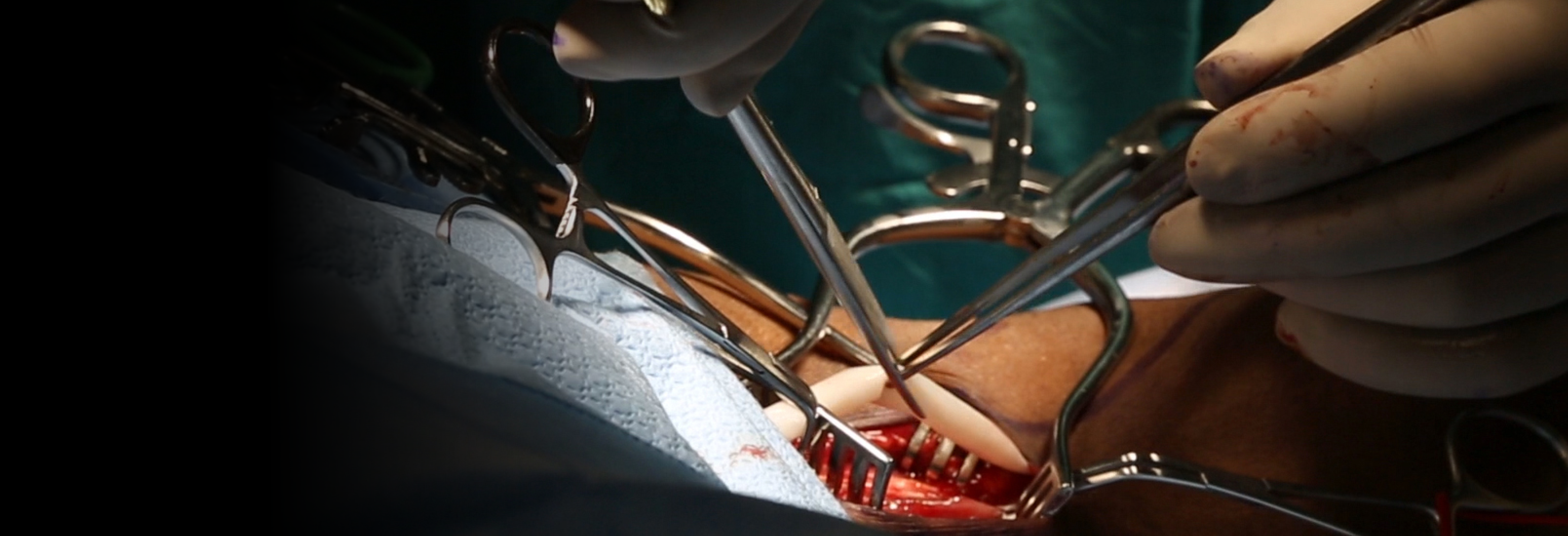
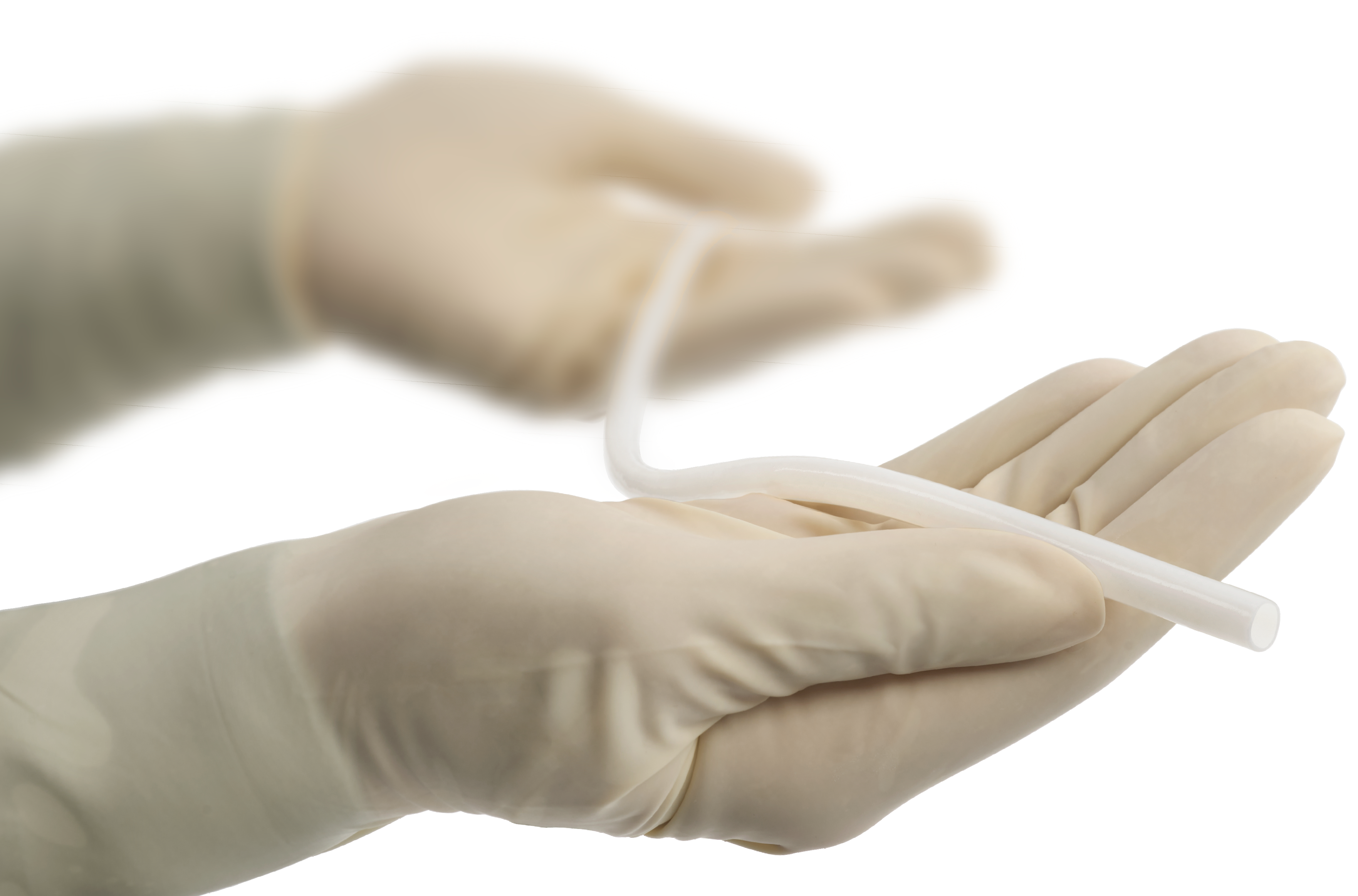
The first and only human-derived acellular vessel for vascular trauma repair.1 Precisely bioengineered for consistency and predictability from vessel to vessel.2,3
Designed to address challenges and limitations in vascular repair, Symvess retains bioactivity, restores blood flow post-implantation, and repopulates with the patient’s cells.1-3


Symvess is available for use off-the-shelf, and ready to use straight out of the package without the need for significant preparation such as rinsing or thawing.1,2
Symvess eliminates the need for vein harvesting, which helps reduce ischemia time.1,2

Symvess begins from donated human aortic smooth muscle cells.1-3 After the vessel is formed the cell nuclei are removed and 20+ Key extracellular matrix proteins are retained, leaving an intact bioactive, extracellular matrix (ECM) that is universally implantable with no observed rejection in clinical studies.1-5

In vitro study demonstrated that Symvess exhibited low susceptibility to infection, likely due to its biocompatibility with host cells including neutrophils because of its native-like composition of human extracellular matrix proteins.6 This is especially important with extremity arterial trauma injuries which carry a high risk of infection due to their inherently contaminated nature.7

In studies, the strength of Symvess matched that of femoral artery, which is stronger than saphenous vein, the current standard of care in vascular trauma repair.2,3
Symvess possesses the mechanical properties capable of withstanding surgical manipulation and averting mechanical failure post-implantation. The extracellular matrix (ECM) is composed of cross-linked vascular collagens type I and III, known for their tensile strength.8
The structural and mechanical attributes, including wall thickness, suture strength, and burst pressure of Symvess are similar to those of femoral artery.2,3

Symvess retains bioactivity.1-3 Once implanted, Symvess restores blood flow.1-3 The bioactive properties of Symvess harness the body’s own natural processes, and over time, Symvess repopulates with the patient’s cells.1-3
How It Works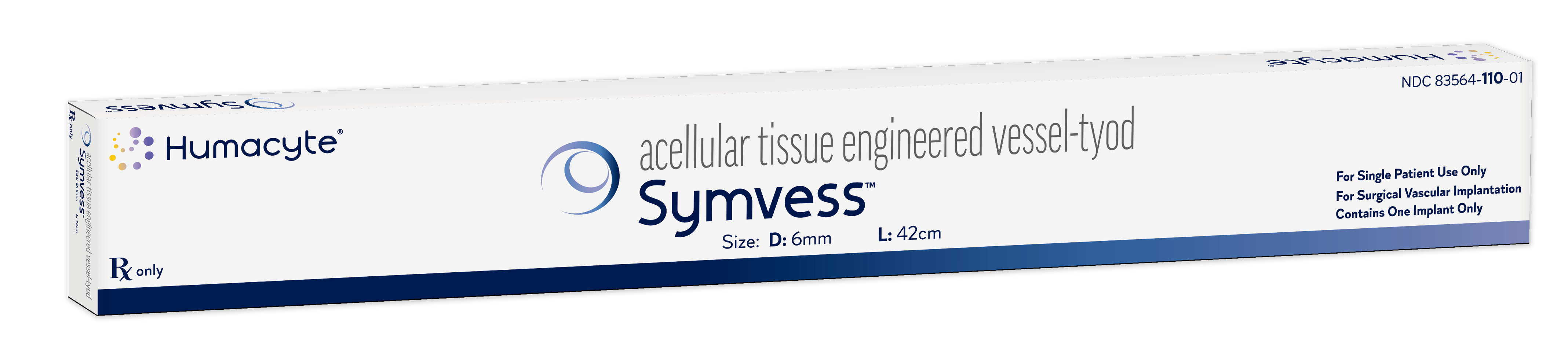
Symvess Carton Dimensions L: 30 3⁄8” x W: 4 3⁄16” x H: 1 11⁄16”
To request more information about Symvess,
contact Customer Care at 1-833-591-0081 or [email protected]


IMPORTANT SAFETY INFORMATION
BOXED WARNING: GRAFT FAILURE
CONTRAINDICATIONS
DO NOT use SYMVESS in patients who have a medical condition that would preclude long-term antiplatelet therapy (such as aspirin or clopidogrel) after resolution of acute injuries.
WARNINGS & PRECAUTIONS
ADVERSE REACTIONS
The most common adverse reactions (≥3%) were thrombosis, fever, pain, anastomotic stenosis, rupture or anastomotic failure, and infection.
USE IN SPECIFIC POPULATIONS
Pediatric Use: The safety and effectiveness of SYMVESS in pediatric patients (0 to 17 years old) have not been established.
Geriatric Use: Two patients out of the 54 Extremity Group implanted with SYMVESS as a conduit in Study 1 were aged ≥65 years. The number of patients aged ≥65 years was not sufficient to determine whether they responded differently than younger patients to SYMVESS.
INDICATION
SYMVESS is an acellular tissue engineered vessel indicated for use in adults as a vascular conduit for extremity arterial injury when urgent revascularization is needed to avoid imminent limb loss, and autologous vein graft is not feasible.
IMPORTANT SAFETY INFORMATION
BOXED WARNING: GRAFT FAILURE
CONTRAINDICATIONS
DO NOT use SYMVESS in patients who have a medical condition that would preclude long-term antiplatelet therapy (such as aspirin or clopidogrel) after resolution of acute injuries.
WARNINGS & PRECAUTIONS
ADVERSE REACTIONS
The most common adverse reactions (≥3%) were thrombosis, fever, pain, anastomotic stenosis, rupture or anastomotic failure, and infection.
USE IN SPECIFIC POPULATIONS
Pediatric Use: The safety and effectiveness of SYMVESS in pediatric patients (0 to 17 years old) have not been established.
Geriatric Use: Two patients out of the 54 Extremity Group implanted with SYMVESS as a conduit in Study 1 were aged ≥65 years. The number of patients aged ≥65 years was not sufficient to determine whether they responded differently than younger patients to SYMVESS.
INDICATION
SYMVESS is an acellular tissue engineered vessel indicated for use in adults as a vascular conduit for extremity arterial injury when urgent revascularization is needed to avoid imminent limb loss, and autologous vein graft is not feasible.
